Overview
What this menu has to do
A bar menu sells atmosphere and has to survive low light. Guests read it in a few seconds, usually after deciding roughly what kind of drink they want, so the sections matter more than the descriptions.
Keep the four sections, adjust the counts to your back bar, and write each drink once — name, description, price, allergens — so the same entry works on the table card and in a link a guest opens at the bar.
Structure
The categories, in reading order
Keep the order, adjust the counts to your kitchen.
- 01
Signature cocktails
6–10 drinksYour reason for existing, and the section that carries the margin. Lead with it, and name the spirits rather than the technique.
- 02
Classics
6–8 drinksThe safety net. Guests who do not want to think order from here, so keep the names standard and resist renaming them.
- 03
Beer and wine
8–14 itemsRead by the half of the table not drinking cocktails. Split by style, and always show the pour size.
- 04
Bar snacks
4–6 itemsShort and shareable. Enough to keep a table seated for a second round, not a food menu.
Worked example
What one finished entry looks like
One dish from each category, written the way a guest should read it.
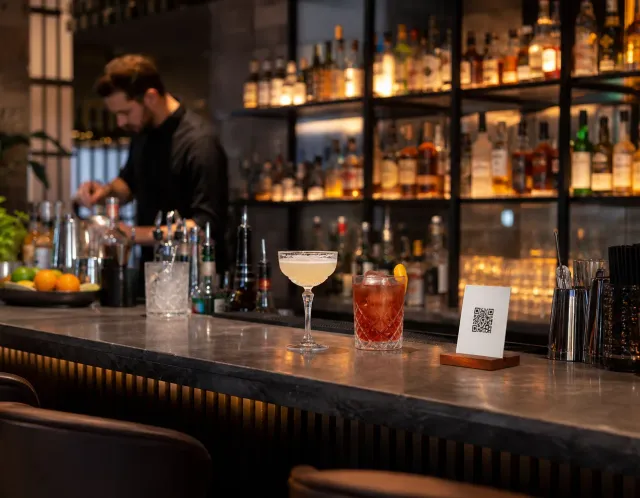
This is how the same four entries reach a guest: one page, opened from a QR code or a link.
Example content for illustration. Prices are shown with the same formatting a published ListoQ menu uses.
Writing notes
Three things worth getting right
Name the spirits, skip the technique
“Stirred over hand-cut ice” is for staff. Guests choose by what is in the glass, so lead with the spirits and let one short clause carry the rest.
Every pour needs a size
A cocktail at 90 ml and a wine at 175 ml are different purchases. Put the volume in the description so the price can be compared.
Sulphites are on nearly every wine
Sulphites are one of the 14 EU allergen categories and appear across the wine list and some cocktails. Tag them per drink rather than printing one blanket line.
Questions
Common questions about this menu
- How many drinks should a bar menu have?
- Between 20 and 35 drinks across all sections works for most bars, and the counts on this page add up to that range. Longer lists slow the bar during service and push guests back to the classics anyway.
- Should signature cocktails go before the classics?
- Yes. Guests who want a classic will find it wherever it sits, but the signature list only gets read if it comes first, and that is where the margin is.
- Do bar menus need allergen information?
- In the EU, information about the 14 named allergen categories has to be available for every unpackaged item sold, and that includes drinks and bar snacks. Sulphites, milk and nuts are the ones that appear most often on a bar list.
- How do I list wine by the glass and by the bottle?
- As one wine with two sizes, glass and bottle, each with its own price. Guests compare both on one line, and the wine list stays half as long.
- Should a bar menu have photos?
- For signature cocktails, yes: a photo sells a drink guests have never heard of. Add photos there and leave the rest without, or turn photos off for the whole menu if you prefer a clean text list.
More templates
Other menus you may be building
- Bakery menu templateA bakery menu structure you can start from: four sections, how many items each should hold, and a worked example with prices and allergen labels.
- Pizzeria menu templateA pizzeria menu structure you can start from: four sections, how many pizzas each should hold, and a worked example with prices and allergen labels.
- Food truck menu templateA food truck menu structure you can start from: four short sections, how many items each should hold, and a worked example with prices and allergens.