Overview
What this menu has to do
A coffee shop menu is a drinks list with food attached, not the other way round. Guests arrive knowing roughly what they want and are really checking two things: whether you make it, and what it costs.
Keep the four sections, adjust the counts to your bar, and write each drink once — name, description, price, allergens — so the same entry works on the wall, at the till and in a link a regular opens on their phone.
Structure
The categories, in reading order
Keep the order, adjust the counts to your kitchen.
- 01
Espresso
5–7 drinksThe list most guests check first. Keep the classic names and let the description carry the size rather than the name.
- 02
Filter and brew
3–5 drinksWhere your sourcing shows. Name the origin and the method: guests who care read this closely, and the rest skip it happily.
- 03
Milk and alternatives
3–5 optionsNot a section guests order from, but the one that decides whether they order at all. State what you stock and what it costs.
- 04
Food to go
4–8 itemsShort by design. Pastries and one or two savoury items that survive the counter and travel in a bag.
Worked example
What one finished entry looks like
One dish from each category, written the way a guest should read it.
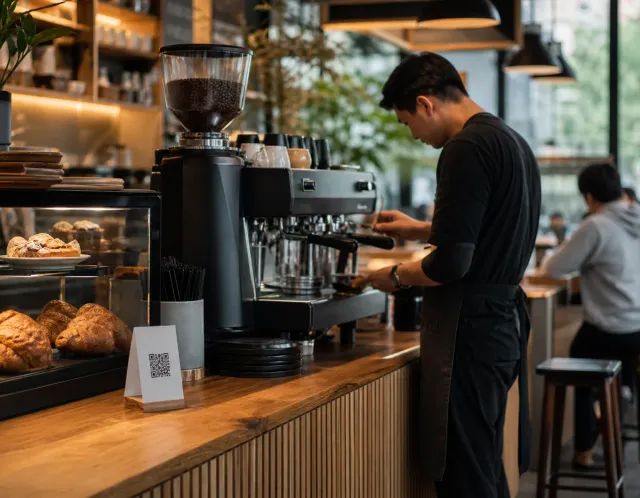
This is how the same four entries reach a guest: one page, opened from a QR code or a link.
Example content for illustration. Prices are shown with the same formatting a published ListoQ menu uses.
Writing notes
Three things worth getting right
Name the drink, then size it
“Large latte” tells a guest nothing about the drink. Put the classic name in the title and the volume in the description, where it belongs.
Price milk alternatives openly
The most common question at a coffee bar is what oat milk costs. Put the answer on the menu, whether it is free or a surcharge.
Nuts hide in the pastry case
Almond, hazelnut and pistachio turn up across a coffee shop's food. Tag nuts as a structured allergen so a guest can filter the whole case at once.
Questions
Common questions about this menu
- How many drinks should a coffee shop menu list?
- Between 12 and 20 drinks works for most specialty bars, and the counts on this page land in that range. A longer list slows the queue and rarely adds sales, because guests order from the first six lines anyway.
- Should I put the coffee origin on the menu?
- On the filter section, yes; on espresso, usually not. Filter buyers choose by origin, espresso buyers choose by drink, and putting origin on every line makes the fast section slow to read.
- How should I show milk alternatives?
- As their own short section, with the price stated. Guests who need them are checking availability before they join the queue, and one section answers it for the whole menu.
- How do I list cup sizes and extra shots?
- Put the cup sizes on each drink, each with its own price, and list extra shots and syrups in a short add-ons section. One line per drink keeps the fast section fast to read.
- How often can I change the filter coffee on the menu?
- As often as the bag changes. Edit the origin and tasting notes, publish, and the QR code on the bar shows the new coffee without reprinting anything.
More templates
Other menus you may be building
- Bar menu templateA bar menu structure you can start from: four sections, how many drinks each should hold, and a worked example with prices, sizes and allergens.
- Bakery menu templateA bakery menu structure you can start from: four sections, how many items each should hold, and a worked example with prices and allergen labels.
- Pizzeria menu templateA pizzeria menu structure you can start from: four sections, how many pizzas each should hold, and a worked example with prices and allergen labels.